

This website uses cookies to ensure you get the best experience on our website. Learn more

Three Account Takeover Attack Methods and How to Prevent Them
Table of Contents

Last updated on September 22, 2026
The average identity now holds around 100,000 permissions, while 27.8% of the total permissions in an organization remain ungoverned. When combined with the rise in hybrid and remote work, the attack surface is expanding in ways most security teams can’t see or control. When access isn’t tightly controlled, a single compromised account is dangerous. Understanding how account takeovers happen and where the risks lie is key to putting effective controls in place.
What is account takeover?
Account takeovers are a form of identity theft and fraud where cybercriminals exploit stolen user credentials, stolen session-cookies and employee accounts to gain unauthorized access to data and resources.
Once inside, attackers can launch further attacks as a trusted identity. In many cases, they will attempt to move laterally across systems or escalate the breach to a privileged account, with the ultimate aim of compromising a domain controller. They may also act as the user to send phishing emails to commit financial fraud or further expand their access.
How does an account takeover happen?
Account takeovers typically combine techniques like social engineering and session hijacking to gain and maintain access. Advances in artificial intelligence (AI) have enabled attackers to generate more advanced phishing messages and create highly personalized social engineering attacks. Below are three common methods attacks use to breach and take control of accounts:
1. Credential abuse and multi-factor authentication (MFA) attacks
Credential abuse is still one of the most reliable entry points in an organization, accounting for 22% of breaches in 2025. Attackers obtain usernames and passwords through infostealer malware or reuse credentials from previous breaches.
MFA is a crucial defense against these attacks, however, it’s possible to exploit the MFA step if they already possess account credentials. One approach is MFA fatigue, sometimes called prompt bombing. This is when the attacker repeatedly triggers authentication requests, hoping the user eventually approves one out of confusion or frustration.
Hackers employed this technique against an Uber employee in 2022, overwhelming the user with login requests until they eventually approved one. Through that one account, the hacker escalated the attack and compromised Uber’s entire cloud ecosystem, as well as the personal information of 77,000 employees.
2. Phishing and Man-in-the-Middle (MITM) Attacks
Phishing tricks individuals into clicking malicious links or attachments to steal sensitive information like personally identifiable information (PII) and login credentials. Modern phishing scams can be very sophisticated, leveraging legitimate domains and imitation login screens that closely mirror the real page.
This was the case when the threat intelligence team at Outpost24, Specops’ parent company, uncovered a multi-chain redirect phishing campaign in the wild fronting as network equipment provider Cisco. This example highlights how well-disguised these scams can now appear.
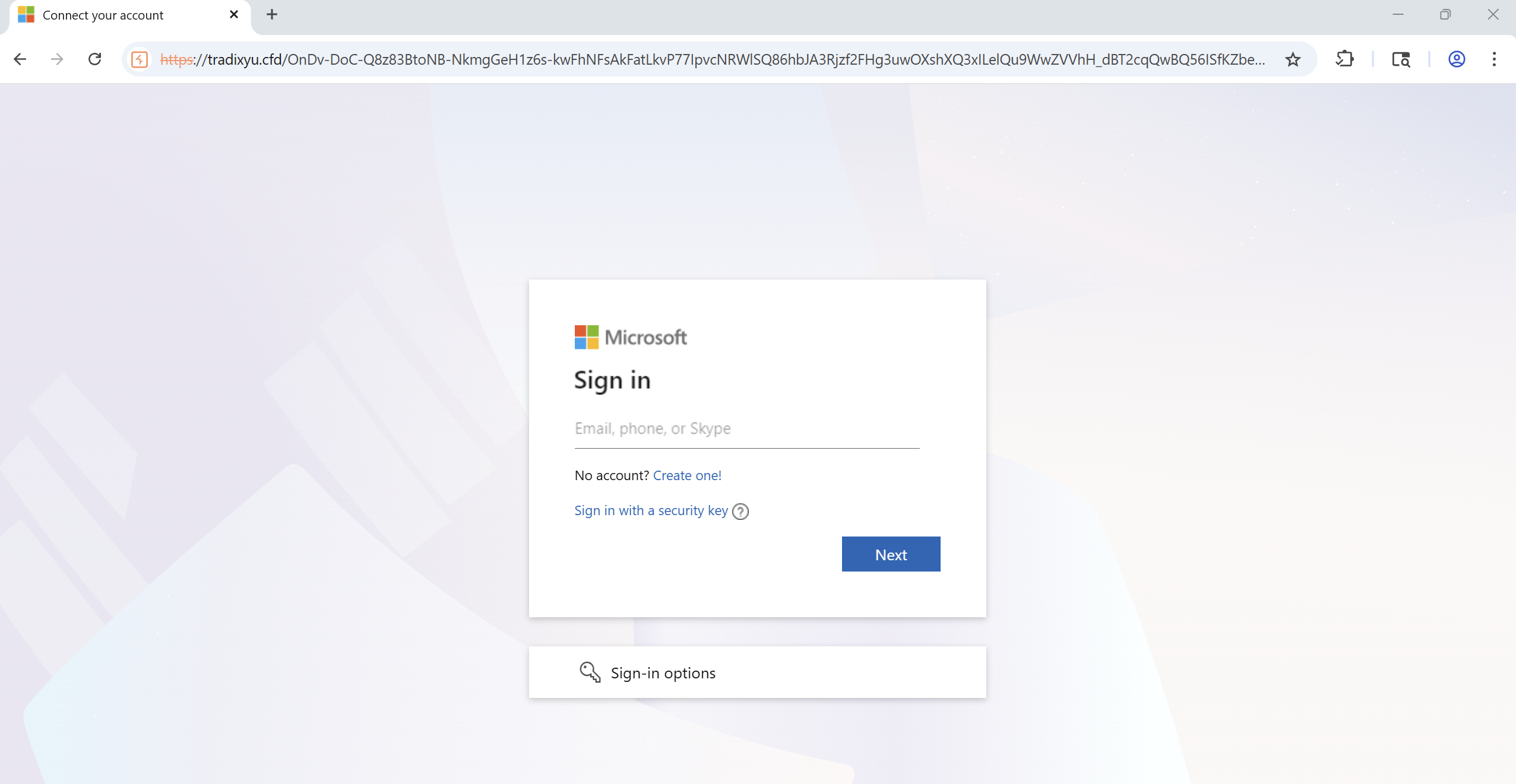
A convincing fake sign-in page used in the Cisco phishing campaign.
In a MITM attack, the attacker acts like a hidden eavesdropper in user conversation with a website. They can steal data, like login details, by intercepting the communication. They achieve this by setting up a fake website or even a reverse tunnel disguised under a familiar domain.
This tunnel intercepts communication between a user and the real website, allowing the attacker to steal session cookies and other sensitive data as everything is exposed to them.
3. Vulnerable or untrusted devices
If security teams don’t have visibility into device health, unmanaged or untrusted hardware can quickly become a blind spot. That is especially true for increasingly common Bring-Your-Own-Device policies, which often operate outside of central control.
Users can access corporate apps and data from virtually any device, whether it’s managed or personal, compliant or vulnerable. That includes devices missing critical updates, running insecure configurations, or already compromised. Attackers operate in these gaps, for instance installing infostealers to quietly capture credentials and session data over time.
Why these attacks succeed
Account takeovers succeed because most identity security tools assume that the person using a set of credentials is the account owner. That assumption means an attacker could obtain legitimate credentials through an infostealer and then log in using their own hardware. As many identity and access management tools aren’t built to authenticate and verify devices, that leaves a potentially devastating gap in organizational security.
In trying to close that gap, IT and security teams typically face a difficult trade-off: block access when device posture isn’t aligned and potentially impact productivity, or allow access and accept the risk that the device may not be secure. Most organizations end up somewhere in between, without fully resolving the underlying issue. What is clear is that identity alone is no longer a sufficient signal for trust, as demonstrated in high-profile breaches at organizations like Clorox and Marks and Spencer.
Prevent account takeovers with Specops Device Trust
It only takes one unpatched device or leaked credential for an attacker to gain easy access to a company’s resources with their own device and cause a major breach. That’s why modern Zero Trust identity security needs to evolve. Bringing device trust into the equation gives you a clearer picture of who’s accessing your resources, and from what.
With Specops Device Trust, security teams can strengthen access decisions without adding friction for users. By integrating with your existing IdPs, VPNs, and SSO tools, you can extend your current setup rather than replace it.
- Device authentication: Ensure only approved devices can access sensitive resources by binding users to trusted devices.
- Continuous device verification: Check device posture at both login and throughout a session across factors like OS updates, browser versions, and security tooling.
- Flexible device coverage: Apply policies across both corporate and personal devices, with the ability to tailor access based on risk and context.
- On-access remediation: Address issues as they arise without interrupting users unnecessarily. Instead of forcing password resets or blocking access outright, you can guide users to resolve problems and continue working securely.
Robust identity security combines strong authentication with a smooth user experience. By factoring in device trust with Specops, you reduce the chances of account takeover without slowing your teams down. If you want to see how this approach fits into your environment, contact us today.
Last updated on September 22, 2026